Store-to-warehouse asset visibility and optimization across every channel.
Retailers run POS systems, handheld scanners, warehouse infrastructure, and e-commerce platforms across hundreds of sites. Zionit unifies IT asset tracking, license governance, and intelligent automation so omnichannel operations stay efficient and audit-ready.
Modern retail IT spans brick-and-mortar stores, distribution centers, dark stores, and digital commerce stacks—each generating devices, subscriptions, and operational data that must stay aligned.
Distributed store estates
Every location runs POS terminals, tablets, printers, and networking gear. Without centralized tracking, shrinkage and ghost assets accumulate silently.
Warehouse and fulfillment complexity
Handheld scanners, label printers, WMS terminals, and automation equipment need lifecycle management tied to operational uptime.
E-commerce and SaaS stacks
Cloud storefronts, payment tools, and martech subscriptions multiply quickly—license optimization and compliance become ongoing work.
Seasonal scale and pop-up sites
Peak seasons and temporary locations demand rapid device deployment, return processing, and accurate inventory without manual chaos.
Pain Points
Key challenges retailers face
Retail IT and operations teams struggle when store, warehouse, and HQ systems each hold partial asset data that never reconciles.
01
Multi-site inventory blind spots
Devices move between stores, repair depots, and warehouses without consistent tracking—creating loss and compliance gaps.
02
POS and endpoint sprawl
Registers, kiosks, and mobile devices age on different cycles, making refresh planning and warranty management difficult.
03
Shrinkage and asset loss
Untracked laptops, scanners, and peripherals drive unnecessary repurchases and weak loss-prevention programs.
04
License overspend
Store software, back-office tools, and e-commerce platforms accumulate unused seats across regions and brands.
05
Slow new-store rollouts
Opening locations still depends on manual checklists, email coordination, and inconsistent kitting standards.
06
Omnichannel coordination friction
Store, warehouse, and digital teams lack automated workflows for stock exceptions, returns, and customer inquiries.
Industry Outlook
The future of retail IT
Retail leaders are investing in unified commerce, store automation, and data-driven operations. These trends are reshaping how brands govern technology across physical and digital channels.
Unified commerce and omnichannel
NRF and industry research on retail technology highlights how brands integrate in-store, online, and mobile experiences—requiring connected inventory, fulfillment, and customer data across channels.
McKinsey retail insights examine how companies digitize stores, supply chains, and customer engagement—putting greater demands on IT asset visibility and operational agility.
Gartner retail technology research covers how CIOs prioritize cloud, AI, inventory optimization, and store associate enablement amid margin pressure and shifting shopper behavior.
Statista and industry data on global e-commerce continue to show rising digital sales share—driving investment in commerce platforms, payments, and fulfillment technology.
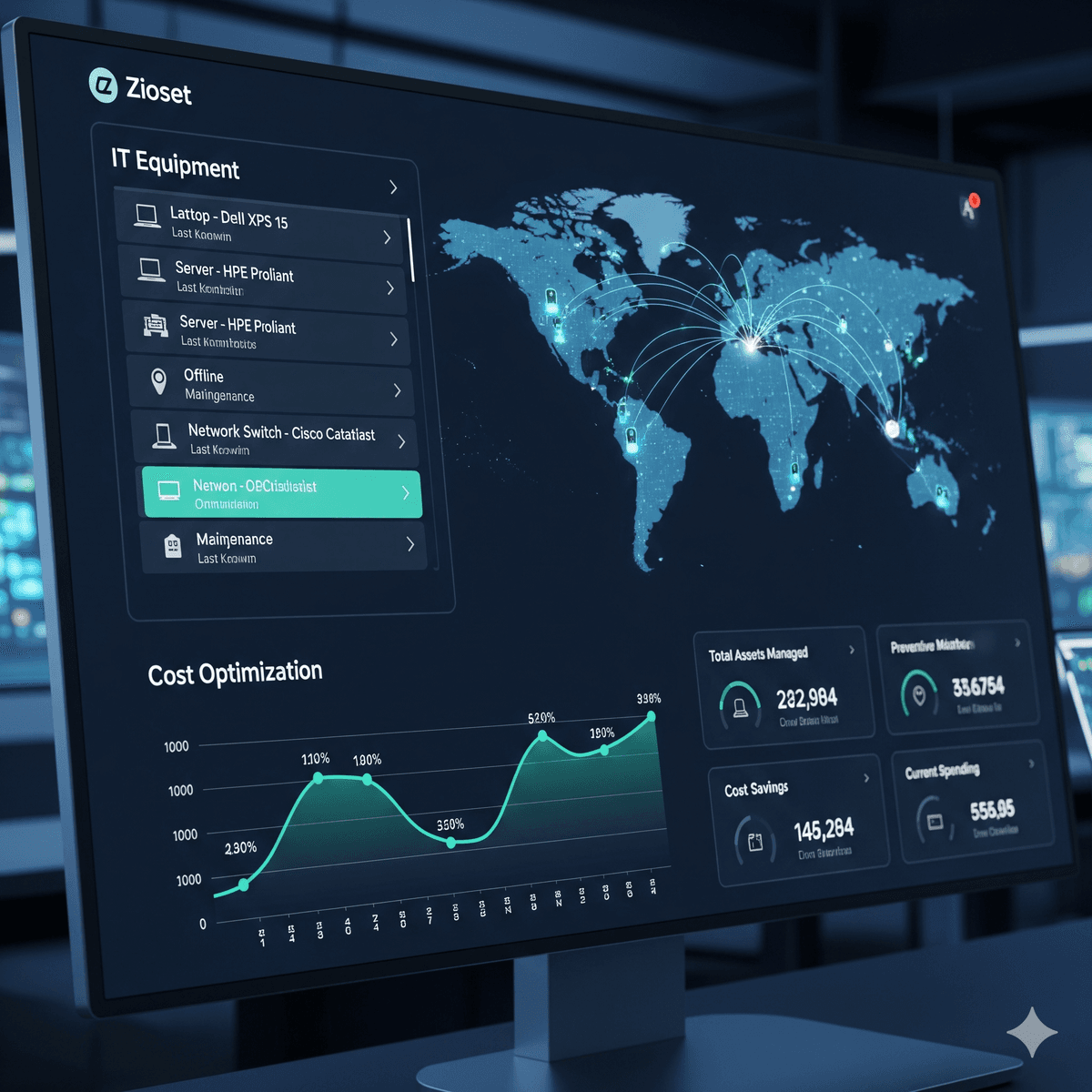
ZioSet delivers multi-location ITAM, SAM, and lifecycle management for stores, warehouses, and HQ—so retail estates stay visible, optimized, and audit-ready.
Real retail scenarios—store estates, warehouses, e-commerce platforms, and omnichannel operations.
POS and in-store endpoint management
Register every POS terminal, kiosk, and tablet by store and lane.
Track warranty, OS version, and patch status per device.
Swap faulty registers with full custody transfer records.
Plan refresh cycles before peak holiday seasons hit.
Give regional IT a live view of store device health.
Ready to unify IT across your retail estate?
See how ZioSet and ZioBot help retailers and e-commerce brands gain multi-location visibility, optimize device lifecycles, and automate omnichannel operations.